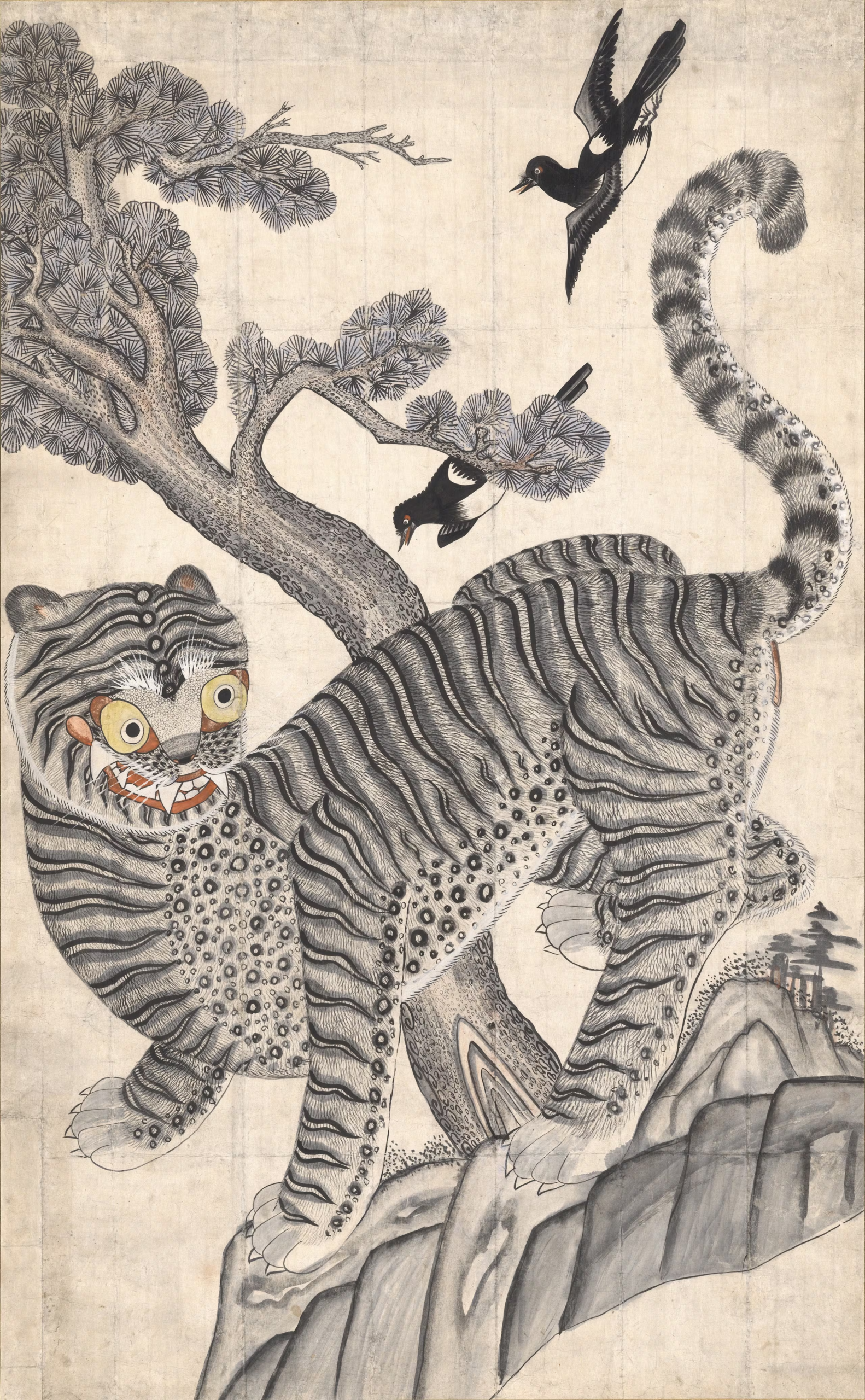
Magpie and Tiger. Collection: National Museum of Korea. Currently on view at the British Museum, London, in Korea: 2,000 years of creativity (1 October 2026–31 January 2027). Image: National Museum of Korea.
Next time you look at a Korean tiger painting, look for the bird. It might perch on a branch above the animal or swoop into the space around it. That small figure can change how you read the scene.
In Korean tiger and magpie paintings, the two animals bring together wishes for protection and good news. Their contrasting sizes also make a lively picture: a formidable cat sharing its space with a bird that seems quite comfortable there.
What do the tiger and magpie mean in Korean art?
The Asian Art Museum in San Francisco explains that paintings of the two animals were placed at house gates on New Year’s Day to welcome good fortune. Tigers were believed to drive away evil spirits, while magpies heralded good news.
Together, they turn an animal picture into a wish for the household. The Metropolitan Museum of Art also describes the magpie’s association with good news in Korea and tiger paintings used to ward off misfortune.
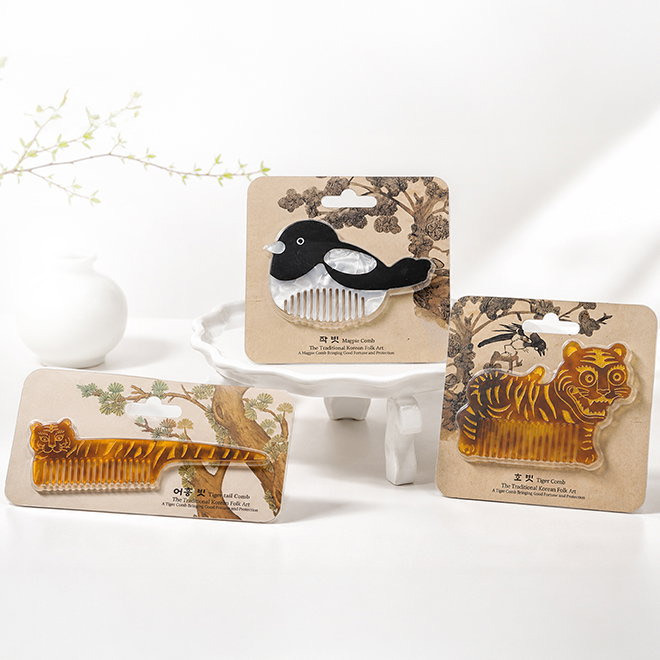
These meanings offer a starting point for looking at contemporary design. A maker may draw on that history, adapt it, or simply enjoy the animals’ shapes. The particular object and its creator’s explanation still matter.
Sources: Asian Art Museum; The Metropolitan Museum of Art
How a small bird changes the scene
For a separate example, look at Tiger and magpies in the Asian Art Museum’s collection in San Francisco, a Korean painting dated 1850–1900. This is a different work from the National Museum of Korea painting shown at the top of this story. A seated tiger bares its teeth beneath two birds in a pine tree. The museum points out the humour in the supposedly fearsome expression.
The birds give the tiger someone to react to. A glance can read as a response, an open mouth as an exchange. We can enjoy that suggestion without supplying dialogue for the artist.
When looking at a tiger design, try asking:
- Where is each creature looking?
- How much space does each one get?
- Does the tiny figure seem at ease beside the large one?
A face can be funny on its own. A second character gives the eye something more to follow.
Source: Asian Art Museum
From Korean painting to a London exhibition
The painting pictured at the top of this story is Magpie and Tiger from the National Museum of Korea’s collection. It is currently on view in Korea: 2,000 years of creativity, a special exhibition at the British Museum in London running from 1 October 2026 to 31 January 2027. The exhibition draws on the late Lee Kun-hee’s donated collection alongside works from the British Museum.
The London exhibit and the San Francisco collection record refer to two separate paintings. Comparing them gives us a way to notice how the same subject can take on different expressions and compositions.
Source: National Museum of Korea
A familiar subject, with room for variation
A magpie is a useful clue, but every tiger painting deserves its own look. The Cleveland Museum of Art notes that Korean tiger paintings often include the birds; in its late-nineteenth-century Tiger Family, a red sun appears behind a pine instead.
Recognising a motif opens a question about the artist’s choices. Which elements are present, and what takes their place when they are absent?
Source: Cleveland Museum of Art
Look again at the painting
Explore the London exhibition at the British Museum. To compare a different work, view Tiger and magpies in the Asian Art Museum’s collection, then look back at the National Museum of Korea painting shown above. Start with the eyes, the position of the birds and the space around the tiger.
Which tiger holds your attention—and what part does the bird play in that choice?